
Loving the Game, Distrusting the Custodians: A Case Against Wizards of the Coast and Hasbro
Posted by Rimestock on Tuesday, August 4. 2026
Gatekeeping, Inc. How Wizards of the Coast became what it accuses its critics of.
I still love Dungeons & Dragons. I love the moment a table goes quiet because someone just rolled a natural 20 on the check that decides everything. I love homebrew worlds that took a DM eighteen months to build for six friends who will never publish a word of it. None of that is in question here.
What is in question is the company that now owns the name printed on the cover of the books we play from - and the parent conglomerate above it. Over the last several years, Wizards of the Coast and Hasbro have given the hobby a long, well-documented string of decisions that treat the game less like a creative tradition they're stewarding and more like a revenue line to be optimised until it breaks. This piece lays out what happened, with sources, and why it matters.
A Note on Where I'm Writing This From
I've been an advocate for tabletop roleplaying for 47 years. In that time I've sat at tables running and playing more systems than I can accurately count - D&D across most of its editions, sure, but also everything else the hobby has produced along the way. I bring that up because more than once, saying any version of what's in this piece out loud has gotten me accused of hating D&D, of gatekeeping the hobby, of ruining other people's fun by refusing to just let them enjoy their game in peace.
That accusation has it backwards. I'm not writing this because I dislike D&D. I'm writing it because I've spent close to five decades caring about this hobby in all its forms, and I don't think loving a game requires giving its corporate owner a pass on how it treats the people who play it, make it, and depend on it for a living. Wanting better custodianship of something you love isn't gatekeeping - it's the opposite of indifference. The rest of this piece is the evidence for why that distinction matters.
1. The Stated Strategy: Turning the Hobby Into "Recurrent Spending"
None of what follows is guesswork about motive - Wizards and Hasbro have said the quiet part in public, repeatedly, to investors.
In December 2022, Wizards of the Coast president Cynthia Williams told investors during a fireside chat that Dungeons & Dragons was "under-monetised" and laid out a goal of building a "recurrent spending environment" around the game - company language for the kind of ongoing microtransaction and subscription revenue familiar from live-service video games (Kotaku); (Game Rant).
At the time, D&D was generating on the order of $300 million a year against Magic: The Gathering's roughly $1 billion - a gap Hasbro leadership has been open about wanting to close by developing up to five new D&D video games and building out D&D Beyond as the central hub through which the brand is monetised going forward (Wargamer); (TTRPG Insider). D&D Beyond already sells purchasable cosmetic dice, avatars, and add-on content on top of subscriptions. That gap has since widened rather than closed: Magic's revenue climbed to roughly $1.7 billion in 2025, a 59% jump on the year before, while D&D's contribution remains a fraction of that.
The strategy is working, by the metric that matters to Hasbro's leadership: in its Q3 2025 investor call, the Wizards and Digital Gaming division - which houses D&D and Magic - was Hasbro's single fastest-growing segment, with revenue up 41.6% year-over-year to $572 million. The broader "Playing to Win" plan Hasbro unveiled in February 2025 targets $1 billion in gross cost savings by 2027, with roughly half of that dropping straight to the bottom line, alongside mid-single-digit revenue growth and steady annual improvement in operating profit margin (TTRPG Insider); (Hasbro Newsroom). None of that growth requires the game itself to get better. It requires more surfaces to sell against, which is precisely what the rest of this piece documents happening in practice.
2. The OGL 1.1 Land Grab
For over twenty years, the Open Game License (OGL) let third-party publishers build and sell content compatible with D&D - everything from tiny one-page adventures to entire competing game lines like Paizo's Pathfinder - without paying Wizards a cut. It was the legal backbone of an entire cottage industry of small creators.
In December 2022, a draft of a new license, OGL 1.1, leaked. It would have deauthorised the original 1.0 license, required the largest third-party publishers to pay royalties on revenue (not profit), and given Wizards ownership rights over content published under it - retroactively pulling the rug out from under businesses that had built their livelihoods on the original terms (TechCrunch). More than 54,000 people signed an open letter opposing the change under the banner #OpenDND, and Paizo announced it would abandon the OGL entirely, forming what became the independent ORC license instead (Inverse).
Wizards only backed down after the backlash threatened real revenue - first issuing a statement on January 13, 2023, then on January 18 describing a "path forward," and finally in February releasing a walked-back OGL 1.2 alongside a Creative Commons release of the core rules (Blizzard Watch). The company deserves no credit for reversing a plan it only abandoned once tens of thousands of paying customers and its own creator base revolted. The instinct to try it in the first place is the point: given the option, Wizards' leadership reached for a mechanism to tax and control the community that built the hobby's third-party ecosystem.
3. Bleeding Magic: The Gathering Dry
D&D isn't Wizards' only property, and Magic: The Gathering's treatment previews how a Hasbro-owned game gets managed once it's identified as a cash source. A shareholder lawsuit alleges that starting around 2016, Hasbro pursued what was internally called a "parachute" strategy - deliberately overprinting Magic sets to generate short-term cash whenever other parts of the company came up short, accelerating release cadence sharply after 2019 (Wargamer).
The market noticed before the lawsuit did. A 2022 Bank of America analyst report - based on conversations with players, collectors, distributors, and local game stores - warned that Hasbro was "destroying the long-term value" of Magic by flooding the market with product marketed as limited that wasn't, crashing secondary-market prices and burning years of collector goodwill in a few quarters (Wargamer). Secret Lair, once a print-to-order model, shifted in 2024 to artificially scarce limited runs, with prices ranging anywhere from $9.99 to $49.99 for non-foil product with no consistent logic tying price to content - including a drop reportedly sold at different prices to different buyers as a pricing experiment (The Gamer). That's not a company managing a beloved game. That's a company A/B testing how much its fans will tolerate.
4. Paywalling the Rules Through D&D Beyond
D&D Beyond, the official digital toolset, has increasingly become the mechanism through which core content gets gated. When the 2024 core rulebooks launched, early digital access was tied to subscription tier - pay more, read the new rules sooner, participate in the community conversation about them sooner. Fans described it plainly as a tax on wanting to be part of the discussion before everyone else (EN World). Basic DM customisation tools remain locked behind the higher Master Tier subscription.
Bundle pricing on digital books has also climbed sharply - one add-on rose from $24.99 to $39.99 USD, a 50% jump - and a leaked internal document in early 2023 floated the idea of a $30-per-player-per-month subscription tier, which Wizards denied implementing but never fully dispelled the distrust it created (The Gamer). Whether or not that specific number ever ships, the trajectory is consistent with the "recurrent spending environment" language above: funnel players into a single digital platform, then find more surfaces on that platform to charge for.
5. AI, Part One: Cutting Corners on Art
In August 2023, Wizards had to admit that Bigby Presents: Glory of Giants - a D&D sourcebook due out in ten days - contained artwork a longtime contracted illustrator had partially generated with AI. Wizards said it was unaware and promised to rework the images and tighten its artist guidelines to restrict AI use going forward (GamesRadar). Because the book was already at the printer, the initial run almost certainly shipped with the AI-assisted art anyway (Game Rant). Similar accusations followed for Magic: The Gathering promotional art (PC Gamer). Whatever the precise chain of internal failure, a company with Hasbro's resources should have had a review process capable of catching this before print, especially for a hobby whose entire creative identity rests on the work of human illustrators.
6. AI, Part Two: Coming for the Game Master's Chair
This is the piece of the AI story that gets less attention than the art scandal, and it shouldn't. Wizards and Hasbro have been explicit that AI's real long-term target isn't just cover art - it's the Dungeon Master.
At a Goldman Sachs investor conference in September 2024, Hasbro CEO Chris Cocks said that the "30 or 40" people he regularly plays D&D with all use AI tools for campaign development, character development, or story ideas, and called that a "clear signal" that Wizards should be "embracing" AI. He specifically named "using AI to streamline new player introduction" and "using AI for emergent storytelling" as themes to apply across Hasbro's brands - language that describes automating tasks a human Dungeon Master currently performs, not just generating a picture (PC Gamer).
That framing lines up with a documented structural problem Wizards has cited as justification: D&D has an estimated 64 million players worldwide but nowhere near enough people willing to run games, a persistent "DM shortage" that limits how many new players can actually get seated at a table (StoryRoll). Solving that shortage with software rather than by investing in the (currently unpaid, volunteer) humans who run games would let Wizards monetise a role the hobby has always gotten for free. Consistent with that direction, Wizards has a real, filed patent - submitted October 7, 2025, published February 12, 2026 - for a "virtual artificial intelligence-based gameplay assistant" that receives rules questions, calculates an answer, and issues a ruling with a confidence score, a description that maps closely onto the rules-adjudication half of what a Dungeon Master or judge does at the table (Draftsim).
The company's public messaging on this has been openly inconsistent, which is itself telling. At points Wizards has stated flatly that D&D and Magic "will never use generative AI" in official products (Gizmodo), while Cocks has separately acknowledged having "so much AI-based grist" in his own D&D games "it would floor you," explaining he isn't putting it into official MTG cards or D&D books specifically because players "just don't want it" - a statement about market tolerance, not principle (PC Gamer).
Hasbro has also separately confirmed the company already uses AI internally in other capacities (Game Rant). Artists who work with the company, including illustrator Denman Rooke, have publicly threatened to stop working with Wizards over these comments (CBR). Read together, the pattern is: deny publicly when backlash is loud, keep building and normalising the technology in the background, and reintroduce it in whatever form the market will tolerate.
7. Sigil: Hype, Layoffs, and a Quiet Death
As part of the "One D&D" push in 2022, Wizards announced Sigil, an ambitious 3D virtual tabletop built in Unreal Engine 5, meant to be D&D's answer to Roll20 and Fantasy Grounds. Weeks after the platform entered public beta in March 2025, Wizards laid off roughly 90% of the project team - about 30 people, according to a LinkedIn post from Sigil's senior writer and team leader Andy Collins - after concluding the platform lacked the depth and functionality of existing VTTs and had no viable monetisation path that wouldn't cannibalise D&D Beyond's own sales.
Sigil was folded into D&D Beyond as a smaller feature, and Wizards has confirmed its servers will be shut down permanently on October 31, 2026 (TechRaptor); (Screen Rant); (Game Rant). Years of developer time and a round of hires and layoffs were spent on a product that never had a clear reason to exist beyond "we should own this too."
8. Layoffs Amid Record Profits
This is the part that's hardest to square. In December 2023, Hasbro laid off 1,100 employees - on top of 800 cut earlier that year - roughly 20% of its global workforce, with Wizards of the Coast staff among those affected (Forbes); (GeekWire). A further round hit roughly 150 employees in 2025, alongside closure of Hasbro's Providence, RI offices (Hasbro SEC Filing).
Here's the part that makes it sting: Wizards of the Coast's digital gaming and licensing revenue was up 40% year-over-year to $423.6 million in that same period, netting a $203.4 million operating profit - even as the wider Hasbro toy business struggled. And 2023 was also the year Baldur's Gate 3, built on D&D's ruleset and licensed to Larian Studios, became one of the best-reviewed, best-selling games of the year and swept the Game Awards. Larian's CEO later noted that almost everyone who had been in the original meeting approving the Baldur's Gate 3 deal was no longer at Wizards by the time of the layoffs (PC Gamer).
Hasbro went on to cancel other D&D-branded game projects - including one from Giant Skull - and took a $56 million impairment on its digital games portfolio, all while still citing Baldur's Gate 3 as central to its future strategy (PC Gamer). CEO Chris Cocks, meanwhile, received total compensation of $15.1 million for fiscal year 2023 - the year the layoffs were announced - up from $9.4 million the year before. By fiscal 2024 his total pay had climbed further to roughly $16.8 million, with Hasbro's own disclosures showing a CEO-to-median-employee pay ratio of 160-to-1 that year, with no corresponding cut to his own compensation offered as an alternative to workforce reductions (AFL-CIO Paywatch). Profitable division, record-setting licensed game, and staff still lost their jobs while the executive overseeing the cuts was paid more.
9. Ship It Now, Fix It Later
The 2024 Player's Handbook - the flagship product of a years-long, heavily marketed rules refresh - needed errata almost immediately after release. Early digital and physical copies didn't even match each other consistently, and the volume of corrections needed made the first printing unreliable as a rules reference on its own, prompting fans to openly call the rollout "embarrassing" (EN World). For a product with this much lead time, resourcing, and price tag, that's not an acceptable standard - it's what happens when release-date marketing takes priority over finishing the work.
10. The Uncomfortable Corollary: D&D's Own Market Dominance Functions as Gatekeeping
There's a separate issue worth naming honestly, because it's part of why people who raise the concerns above get misread as "anti-D&D": D&D's dominance over the wider hobby is itself a quiet gatekeeping mechanism, and Wizards benefits from it directly.
D&D holds an estimated 40-50% of the entire TTRPG market by dollar value, and accounts for over half of all campaigns run on Roll20, one of the largest virtual tabletop platforms - a level of market concentration with no real parallel among competing systems (ScriptoriumGM); (rpgdrop). A widely circulated 2017 essay, "D&D Is a Problem for the RPG Hobby," lays out the mechanism: because D&D has become effectively synonymous with "tabletop roleplaying game" for most newcomers, in the way "Kleenex" became synonymous with tissue, new players default to it without ever being meaningfully exposed to the dozens of other systems built for different kinds of stories - horror, investigation, drama, low-fantasy, systems with radically different pacing or rules-lite philosophies that D&D was never designed to handle (Guild Redemund).
That's not a conspiracy - it's what market saturation does on its own. But it functions exactly like gatekeeping in practice: it narrows what newcomers believe "playing an RPG" even means, and it's the reason someone advocating for the other 50-60% of the hobby gets treated as hostile to D&D specifically, rather than as an advocate for the medium as a whole. Broader community discussion of RPG gatekeeping has made the same point from other angles - that insisting on One True Way to play, whether that's a specific edition, a specific system, or a specific table culture, is its own exclusionary act regardless of which system is doing the insisting (Bell of Lost Souls).
None of this makes D&D a villain for being popular. It does mean that "you just hate D&D" is the wrong response to someone who has played more systems across more decades than most critics of that position have been alive, and who is pointing out that the hobby's biggest brand - now under explicit pressure to extract more "recurrent spending" from it - has every commercial incentive to keep things that way.
There's also a simpler, less flattering explanation for why criticism like this gets redirected at the critic instead of at the company: agreeing with it comes at a cost the accuser would rather not pay. If the OGL fight, the Magic overprinting lawsuit, the layoffs alongside record profits, and the quiet build-out of AI tools aimed at the labour Dungeon Masters currently do for free are all real and documented - and they are - then continuing to buy the sourcebooks, pay for the D&D Beyond subscription, and pre-order the next hardcover means personally funding all of it.
That's an uncomfortable thing to sit with, and psychology has a name for the discomfort of holding "I'm a good-faith hobbyist" next to "my money funds a company doing this" at the same time: cognitive dissonance. The cheapest way to resolve that discomfort isn't to change spending habits, do more reading, or hold the company to account - it's to discredit whoever raised the contradiction in the first place. Calling a critic a hater, a gatekeeper, or someone out to ruin everyone else's fun costs nothing and demands no behaviour change from the person doing the calling. Actually reckoning with the fact that a lifetime hobby is bankrolling documented, ethically questionable corporate conduct is a much harder thing to do, so for a lot of people, attacking the messenger is simply the path of least resistance.
Why This Matters
None of this is a single scandal you can write off as a bad quarter. It's a pattern: state outright that the hobby is "under-monetised" and build a strategy to fix that, try to tax the community that built your third-party ecosystem and walk it back only when caught, overprint your other flagship game until you crater its resale market, gate rules content behind subscription tiers, ship AI-assisted art without disclosure, quietly build towards automating the Dungeon Master's role while publicly denying it, burn years of developer time on a VTT product with no real reason to exist, lay off the people who built your most celebrated success while the executive suite gets paid more, and rush unfinished products to market on schedule regardless of quality.
D&D survived TSR's near-bankruptcy in the '90s. It will probably survive this too, partly because the game itself - the rules, the worldbuilding, the thing that happens around a table - doesn't actually belong to a corporate balance sheet no matter whose logo is on the cover. The ORC license Paizo built in response to the OGL fight, and the wider explosion of non-WotC systems and third-party publishers since 2023, are the clearest sign that the hobby has options Wizards can't fully control anymore. That's a good thing. Loving the game and distrusting the people currently profiting from it aren't in conflict - if anything, caring about it is exactly why the record deserves to be laid out plainly.
---
Sources
- Kotaku - D&D CEO Thinks Hobby Is 'Under Monetised' Compared To Video Games
- Game Rant - Wizards of the Coast Says Dungeons and Dragons is 'Under-Monetized'
- Wargamer - Hasbro opens yet another D&D videogame studio
- TTRPG Insider - Q3 2025: Hasbro Doubling Down on D&D's Digital Games
- Hasbro Newsroom - Hasbro Unveils New Strategy: Playing to Win
- TechCrunch - Dungeons & Dragons content creators are fighting to protect their livelihoods
- Inverse - D&D OGL 1.1 scandal: Unpacking the controversial change
- Blizzard Watch - Wizards of the Coast backs down, offers content via Creative Commons
- Wargamer - Investor lawsuit claims Hasbro overprinted MTG cards as a "cash cow"
- The Gamer - Magic: The Gathering's Secret Lair sold at different prices to gauge the market
- The Gamer - D&D Beyond leaked $30/month subscription report
- EN World - Early access to 2024 books tied to D&D Beyond subscription tier
- GamesRadar - Wizards of the Coast says it was unaware of AI art in new D&D book
- Game Rant - Wizards of the Coast responds to D&D book AI art controversy
- PC Gamer - Wizards of the Coast denies using AI in new Magic: The Gathering image
- PC Gamer - Hasbro CEO says all his mates are using AI for their D&D games
- StoryRoll - The DM Shortage Is Real - And the Data Proves It
- Draftsim - Patent Pending on WotC's Proposed AI Rules Adjudicator
- Gizmodo - Hasbro's CEO Says Magic: The Gathering and D&D Will Never Use Generative AI
- PC Gamer - Hasbro CEO still has "so much AI-based grist" in his own D&D games
- Game Rant - Hasbro CEO Confirms Company Has 'Already Been Using AI'
- CBR - Magic: The Gathering and D&D Artist Calls Out Hasbro CEO's AI Comments
- TechRaptor - Wizards of the Coast closes doors on Sigil
- Screen Rant - I've Tried Project Sigil, & I Think I Know Why D&D Is Scrapping Its VTT
- Game Rant - Dungeons and Dragons Sigil VTT Team Suffers Layoffs
- Forbes - Hasbro Layoffs Affect Wizards of the Coast
- GeekWire - Hasbro laying off Wizards of the Coast staff is baffling
- PC Gamer - Hasbro has no idea what to do with Baldur's Gate 3's success
- PC Gamer - Hasbro takes $56 million hit over multiple game cancellations
- AFL-CIO Paywatch - Chris Cocks, Hasbro CEO pay ratio
- EN World - Dungeons & Dragons 2024 Player's Handbook Is Already Getting Errata
- ScriptoriumGM - Top 10 Most Popular TTRPG Systems in 2025
- rpgdrop - Worldwide TTRPG Market in 2024
- Guild Redemund - D&D Is a Problem for the RPG Hobby
- Bell of Lost Souls - RPG Gatekeeping is Bad, Mmkay?
0 Comments
More...
I still love Dungeons & Dragons. I love the moment a table goes quiet because someone just rolled a natural 20 on the check that decides everything. I love homebrew worlds that took a DM eighteen months to build for six friends who will never publish a word of it. None of that is in question here.
What is in question is the company that now owns the name printed on the cover of the books we play from - and the parent conglomerate above it. Over the last several years, Wizards of the Coast and Hasbro have given the hobby a long, well-documented string of decisions that treat the game less like a creative tradition they're stewarding and more like a revenue line to be optimised until it breaks. This piece lays out what happened, with sources, and why it matters.
A Note on Where I'm Writing This From
I've been an advocate for tabletop roleplaying for 47 years. In that time I've sat at tables running and playing more systems than I can accurately count - D&D across most of its editions, sure, but also everything else the hobby has produced along the way. I bring that up because more than once, saying any version of what's in this piece out loud has gotten me accused of hating D&D, of gatekeeping the hobby, of ruining other people's fun by refusing to just let them enjoy their game in peace.
That accusation has it backwards. I'm not writing this because I dislike D&D. I'm writing it because I've spent close to five decades caring about this hobby in all its forms, and I don't think loving a game requires giving its corporate owner a pass on how it treats the people who play it, make it, and depend on it for a living. Wanting better custodianship of something you love isn't gatekeeping - it's the opposite of indifference. The rest of this piece is the evidence for why that distinction matters.
1. The Stated Strategy: Turning the Hobby Into "Recurrent Spending"
None of what follows is guesswork about motive - Wizards and Hasbro have said the quiet part in public, repeatedly, to investors.
In December 2022, Wizards of the Coast president Cynthia Williams told investors during a fireside chat that Dungeons & Dragons was "under-monetised" and laid out a goal of building a "recurrent spending environment" around the game - company language for the kind of ongoing microtransaction and subscription revenue familiar from live-service video games (Kotaku); (Game Rant).
At the time, D&D was generating on the order of $300 million a year against Magic: The Gathering's roughly $1 billion - a gap Hasbro leadership has been open about wanting to close by developing up to five new D&D video games and building out D&D Beyond as the central hub through which the brand is monetised going forward (Wargamer); (TTRPG Insider). D&D Beyond already sells purchasable cosmetic dice, avatars, and add-on content on top of subscriptions. That gap has since widened rather than closed: Magic's revenue climbed to roughly $1.7 billion in 2025, a 59% jump on the year before, while D&D's contribution remains a fraction of that.
The strategy is working, by the metric that matters to Hasbro's leadership: in its Q3 2025 investor call, the Wizards and Digital Gaming division - which houses D&D and Magic - was Hasbro's single fastest-growing segment, with revenue up 41.6% year-over-year to $572 million. The broader "Playing to Win" plan Hasbro unveiled in February 2025 targets $1 billion in gross cost savings by 2027, with roughly half of that dropping straight to the bottom line, alongside mid-single-digit revenue growth and steady annual improvement in operating profit margin (TTRPG Insider); (Hasbro Newsroom). None of that growth requires the game itself to get better. It requires more surfaces to sell against, which is precisely what the rest of this piece documents happening in practice.
2. The OGL 1.1 Land Grab
For over twenty years, the Open Game License (OGL) let third-party publishers build and sell content compatible with D&D - everything from tiny one-page adventures to entire competing game lines like Paizo's Pathfinder - without paying Wizards a cut. It was the legal backbone of an entire cottage industry of small creators.
In December 2022, a draft of a new license, OGL 1.1, leaked. It would have deauthorised the original 1.0 license, required the largest third-party publishers to pay royalties on revenue (not profit), and given Wizards ownership rights over content published under it - retroactively pulling the rug out from under businesses that had built their livelihoods on the original terms (TechCrunch). More than 54,000 people signed an open letter opposing the change under the banner #OpenDND, and Paizo announced it would abandon the OGL entirely, forming what became the independent ORC license instead (Inverse).
Wizards only backed down after the backlash threatened real revenue - first issuing a statement on January 13, 2023, then on January 18 describing a "path forward," and finally in February releasing a walked-back OGL 1.2 alongside a Creative Commons release of the core rules (Blizzard Watch). The company deserves no credit for reversing a plan it only abandoned once tens of thousands of paying customers and its own creator base revolted. The instinct to try it in the first place is the point: given the option, Wizards' leadership reached for a mechanism to tax and control the community that built the hobby's third-party ecosystem.
3. Bleeding Magic: The Gathering Dry
D&D isn't Wizards' only property, and Magic: The Gathering's treatment previews how a Hasbro-owned game gets managed once it's identified as a cash source. A shareholder lawsuit alleges that starting around 2016, Hasbro pursued what was internally called a "parachute" strategy - deliberately overprinting Magic sets to generate short-term cash whenever other parts of the company came up short, accelerating release cadence sharply after 2019 (Wargamer).
The market noticed before the lawsuit did. A 2022 Bank of America analyst report - based on conversations with players, collectors, distributors, and local game stores - warned that Hasbro was "destroying the long-term value" of Magic by flooding the market with product marketed as limited that wasn't, crashing secondary-market prices and burning years of collector goodwill in a few quarters (Wargamer). Secret Lair, once a print-to-order model, shifted in 2024 to artificially scarce limited runs, with prices ranging anywhere from $9.99 to $49.99 for non-foil product with no consistent logic tying price to content - including a drop reportedly sold at different prices to different buyers as a pricing experiment (The Gamer). That's not a company managing a beloved game. That's a company A/B testing how much its fans will tolerate.
4. Paywalling the Rules Through D&D Beyond
D&D Beyond, the official digital toolset, has increasingly become the mechanism through which core content gets gated. When the 2024 core rulebooks launched, early digital access was tied to subscription tier - pay more, read the new rules sooner, participate in the community conversation about them sooner. Fans described it plainly as a tax on wanting to be part of the discussion before everyone else (EN World). Basic DM customisation tools remain locked behind the higher Master Tier subscription.
Bundle pricing on digital books has also climbed sharply - one add-on rose from $24.99 to $39.99 USD, a 50% jump - and a leaked internal document in early 2023 floated the idea of a $30-per-player-per-month subscription tier, which Wizards denied implementing but never fully dispelled the distrust it created (The Gamer). Whether or not that specific number ever ships, the trajectory is consistent with the "recurrent spending environment" language above: funnel players into a single digital platform, then find more surfaces on that platform to charge for.
5. AI, Part One: Cutting Corners on Art
In August 2023, Wizards had to admit that Bigby Presents: Glory of Giants - a D&D sourcebook due out in ten days - contained artwork a longtime contracted illustrator had partially generated with AI. Wizards said it was unaware and promised to rework the images and tighten its artist guidelines to restrict AI use going forward (GamesRadar). Because the book was already at the printer, the initial run almost certainly shipped with the AI-assisted art anyway (Game Rant). Similar accusations followed for Magic: The Gathering promotional art (PC Gamer). Whatever the precise chain of internal failure, a company with Hasbro's resources should have had a review process capable of catching this before print, especially for a hobby whose entire creative identity rests on the work of human illustrators.
6. AI, Part Two: Coming for the Game Master's Chair
This is the piece of the AI story that gets less attention than the art scandal, and it shouldn't. Wizards and Hasbro have been explicit that AI's real long-term target isn't just cover art - it's the Dungeon Master.
At a Goldman Sachs investor conference in September 2024, Hasbro CEO Chris Cocks said that the "30 or 40" people he regularly plays D&D with all use AI tools for campaign development, character development, or story ideas, and called that a "clear signal" that Wizards should be "embracing" AI. He specifically named "using AI to streamline new player introduction" and "using AI for emergent storytelling" as themes to apply across Hasbro's brands - language that describes automating tasks a human Dungeon Master currently performs, not just generating a picture (PC Gamer).
That framing lines up with a documented structural problem Wizards has cited as justification: D&D has an estimated 64 million players worldwide but nowhere near enough people willing to run games, a persistent "DM shortage" that limits how many new players can actually get seated at a table (StoryRoll). Solving that shortage with software rather than by investing in the (currently unpaid, volunteer) humans who run games would let Wizards monetise a role the hobby has always gotten for free. Consistent with that direction, Wizards has a real, filed patent - submitted October 7, 2025, published February 12, 2026 - for a "virtual artificial intelligence-based gameplay assistant" that receives rules questions, calculates an answer, and issues a ruling with a confidence score, a description that maps closely onto the rules-adjudication half of what a Dungeon Master or judge does at the table (Draftsim).
The company's public messaging on this has been openly inconsistent, which is itself telling. At points Wizards has stated flatly that D&D and Magic "will never use generative AI" in official products (Gizmodo), while Cocks has separately acknowledged having "so much AI-based grist" in his own D&D games "it would floor you," explaining he isn't putting it into official MTG cards or D&D books specifically because players "just don't want it" - a statement about market tolerance, not principle (PC Gamer).
Hasbro has also separately confirmed the company already uses AI internally in other capacities (Game Rant). Artists who work with the company, including illustrator Denman Rooke, have publicly threatened to stop working with Wizards over these comments (CBR). Read together, the pattern is: deny publicly when backlash is loud, keep building and normalising the technology in the background, and reintroduce it in whatever form the market will tolerate.
7. Sigil: Hype, Layoffs, and a Quiet Death
As part of the "One D&D" push in 2022, Wizards announced Sigil, an ambitious 3D virtual tabletop built in Unreal Engine 5, meant to be D&D's answer to Roll20 and Fantasy Grounds. Weeks after the platform entered public beta in March 2025, Wizards laid off roughly 90% of the project team - about 30 people, according to a LinkedIn post from Sigil's senior writer and team leader Andy Collins - after concluding the platform lacked the depth and functionality of existing VTTs and had no viable monetisation path that wouldn't cannibalise D&D Beyond's own sales.
Sigil was folded into D&D Beyond as a smaller feature, and Wizards has confirmed its servers will be shut down permanently on October 31, 2026 (TechRaptor); (Screen Rant); (Game Rant). Years of developer time and a round of hires and layoffs were spent on a product that never had a clear reason to exist beyond "we should own this too."
8. Layoffs Amid Record Profits
This is the part that's hardest to square. In December 2023, Hasbro laid off 1,100 employees - on top of 800 cut earlier that year - roughly 20% of its global workforce, with Wizards of the Coast staff among those affected (Forbes); (GeekWire). A further round hit roughly 150 employees in 2025, alongside closure of Hasbro's Providence, RI offices (Hasbro SEC Filing).
Here's the part that makes it sting: Wizards of the Coast's digital gaming and licensing revenue was up 40% year-over-year to $423.6 million in that same period, netting a $203.4 million operating profit - even as the wider Hasbro toy business struggled. And 2023 was also the year Baldur's Gate 3, built on D&D's ruleset and licensed to Larian Studios, became one of the best-reviewed, best-selling games of the year and swept the Game Awards. Larian's CEO later noted that almost everyone who had been in the original meeting approving the Baldur's Gate 3 deal was no longer at Wizards by the time of the layoffs (PC Gamer).
Hasbro went on to cancel other D&D-branded game projects - including one from Giant Skull - and took a $56 million impairment on its digital games portfolio, all while still citing Baldur's Gate 3 as central to its future strategy (PC Gamer). CEO Chris Cocks, meanwhile, received total compensation of $15.1 million for fiscal year 2023 - the year the layoffs were announced - up from $9.4 million the year before. By fiscal 2024 his total pay had climbed further to roughly $16.8 million, with Hasbro's own disclosures showing a CEO-to-median-employee pay ratio of 160-to-1 that year, with no corresponding cut to his own compensation offered as an alternative to workforce reductions (AFL-CIO Paywatch). Profitable division, record-setting licensed game, and staff still lost their jobs while the executive overseeing the cuts was paid more.
9. Ship It Now, Fix It Later
The 2024 Player's Handbook - the flagship product of a years-long, heavily marketed rules refresh - needed errata almost immediately after release. Early digital and physical copies didn't even match each other consistently, and the volume of corrections needed made the first printing unreliable as a rules reference on its own, prompting fans to openly call the rollout "embarrassing" (EN World). For a product with this much lead time, resourcing, and price tag, that's not an acceptable standard - it's what happens when release-date marketing takes priority over finishing the work.
10. The Uncomfortable Corollary: D&D's Own Market Dominance Functions as Gatekeeping
There's a separate issue worth naming honestly, because it's part of why people who raise the concerns above get misread as "anti-D&D": D&D's dominance over the wider hobby is itself a quiet gatekeeping mechanism, and Wizards benefits from it directly.
D&D holds an estimated 40-50% of the entire TTRPG market by dollar value, and accounts for over half of all campaigns run on Roll20, one of the largest virtual tabletop platforms - a level of market concentration with no real parallel among competing systems (ScriptoriumGM); (rpgdrop). A widely circulated 2017 essay, "D&D Is a Problem for the RPG Hobby," lays out the mechanism: because D&D has become effectively synonymous with "tabletop roleplaying game" for most newcomers, in the way "Kleenex" became synonymous with tissue, new players default to it without ever being meaningfully exposed to the dozens of other systems built for different kinds of stories - horror, investigation, drama, low-fantasy, systems with radically different pacing or rules-lite philosophies that D&D was never designed to handle (Guild Redemund).
That's not a conspiracy - it's what market saturation does on its own. But it functions exactly like gatekeeping in practice: it narrows what newcomers believe "playing an RPG" even means, and it's the reason someone advocating for the other 50-60% of the hobby gets treated as hostile to D&D specifically, rather than as an advocate for the medium as a whole. Broader community discussion of RPG gatekeeping has made the same point from other angles - that insisting on One True Way to play, whether that's a specific edition, a specific system, or a specific table culture, is its own exclusionary act regardless of which system is doing the insisting (Bell of Lost Souls).
None of this makes D&D a villain for being popular. It does mean that "you just hate D&D" is the wrong response to someone who has played more systems across more decades than most critics of that position have been alive, and who is pointing out that the hobby's biggest brand - now under explicit pressure to extract more "recurrent spending" from it - has every commercial incentive to keep things that way.
There's also a simpler, less flattering explanation for why criticism like this gets redirected at the critic instead of at the company: agreeing with it comes at a cost the accuser would rather not pay. If the OGL fight, the Magic overprinting lawsuit, the layoffs alongside record profits, and the quiet build-out of AI tools aimed at the labour Dungeon Masters currently do for free are all real and documented - and they are - then continuing to buy the sourcebooks, pay for the D&D Beyond subscription, and pre-order the next hardcover means personally funding all of it.
That's an uncomfortable thing to sit with, and psychology has a name for the discomfort of holding "I'm a good-faith hobbyist" next to "my money funds a company doing this" at the same time: cognitive dissonance. The cheapest way to resolve that discomfort isn't to change spending habits, do more reading, or hold the company to account - it's to discredit whoever raised the contradiction in the first place. Calling a critic a hater, a gatekeeper, or someone out to ruin everyone else's fun costs nothing and demands no behaviour change from the person doing the calling. Actually reckoning with the fact that a lifetime hobby is bankrolling documented, ethically questionable corporate conduct is a much harder thing to do, so for a lot of people, attacking the messenger is simply the path of least resistance.
Why This Matters
None of this is a single scandal you can write off as a bad quarter. It's a pattern: state outright that the hobby is "under-monetised" and build a strategy to fix that, try to tax the community that built your third-party ecosystem and walk it back only when caught, overprint your other flagship game until you crater its resale market, gate rules content behind subscription tiers, ship AI-assisted art without disclosure, quietly build towards automating the Dungeon Master's role while publicly denying it, burn years of developer time on a VTT product with no real reason to exist, lay off the people who built your most celebrated success while the executive suite gets paid more, and rush unfinished products to market on schedule regardless of quality.
D&D survived TSR's near-bankruptcy in the '90s. It will probably survive this too, partly because the game itself - the rules, the worldbuilding, the thing that happens around a table - doesn't actually belong to a corporate balance sheet no matter whose logo is on the cover. The ORC license Paizo built in response to the OGL fight, and the wider explosion of non-WotC systems and third-party publishers since 2023, are the clearest sign that the hobby has options Wizards can't fully control anymore. That's a good thing. Loving the game and distrusting the people currently profiting from it aren't in conflict - if anything, caring about it is exactly why the record deserves to be laid out plainly.
---
Sources
- Kotaku - D&D CEO Thinks Hobby Is 'Under Monetised' Compared To Video Games
- Game Rant - Wizards of the Coast Says Dungeons and Dragons is 'Under-Monetized'
- Wargamer - Hasbro opens yet another D&D videogame studio
- TTRPG Insider - Q3 2025: Hasbro Doubling Down on D&D's Digital Games
- Hasbro Newsroom - Hasbro Unveils New Strategy: Playing to Win
- TechCrunch - Dungeons & Dragons content creators are fighting to protect their livelihoods
- Inverse - D&D OGL 1.1 scandal: Unpacking the controversial change
- Blizzard Watch - Wizards of the Coast backs down, offers content via Creative Commons
- Wargamer - Investor lawsuit claims Hasbro overprinted MTG cards as a "cash cow"
- The Gamer - Magic: The Gathering's Secret Lair sold at different prices to gauge the market
- The Gamer - D&D Beyond leaked $30/month subscription report
- EN World - Early access to 2024 books tied to D&D Beyond subscription tier
- GamesRadar - Wizards of the Coast says it was unaware of AI art in new D&D book
- Game Rant - Wizards of the Coast responds to D&D book AI art controversy
- PC Gamer - Wizards of the Coast denies using AI in new Magic: The Gathering image
- PC Gamer - Hasbro CEO says all his mates are using AI for their D&D games
- StoryRoll - The DM Shortage Is Real - And the Data Proves It
- Draftsim - Patent Pending on WotC's Proposed AI Rules Adjudicator
- Gizmodo - Hasbro's CEO Says Magic: The Gathering and D&D Will Never Use Generative AI
- PC Gamer - Hasbro CEO still has "so much AI-based grist" in his own D&D games
- Game Rant - Hasbro CEO Confirms Company Has 'Already Been Using AI'
- CBR - Magic: The Gathering and D&D Artist Calls Out Hasbro CEO's AI Comments
- TechRaptor - Wizards of the Coast closes doors on Sigil
- Screen Rant - I've Tried Project Sigil, & I Think I Know Why D&D Is Scrapping Its VTT
- Game Rant - Dungeons and Dragons Sigil VTT Team Suffers Layoffs
- Forbes - Hasbro Layoffs Affect Wizards of the Coast
- GeekWire - Hasbro laying off Wizards of the Coast staff is baffling
- PC Gamer - Hasbro has no idea what to do with Baldur's Gate 3's success
- PC Gamer - Hasbro takes $56 million hit over multiple game cancellations
- AFL-CIO Paywatch - Chris Cocks, Hasbro CEO pay ratio
- EN World - Dungeons & Dragons 2024 Player's Handbook Is Already Getting Errata
- ScriptoriumGM - Top 10 Most Popular TTRPG Systems in 2025
- rpgdrop - Worldwide TTRPG Market in 2024
- Guild Redemund - D&D Is a Problem for the RPG Hobby
- Bell of Lost Souls - RPG Gatekeeping is Bad, Mmkay?
How to be a great roleplayer!
Posted by Rimestock on Monday, October 6. 2025
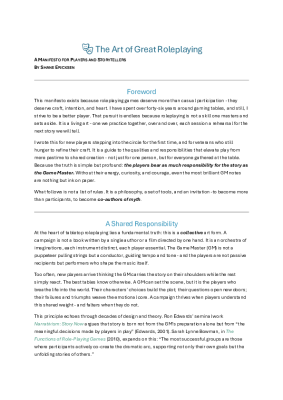
I get asked frequently - how can I be a better GM? I've covered this in various topics and classes however the question that often follows it is how can I be a better player?
Attached is my attempt at helping roleplayers understand the ways they can improve their own "game" to help themselves, other players and the GMs in their TTRPG.
0 Comments
More...
GM Mastery from a Battle Hardened Storyteller!
Posted by Rimestock on Wednesday, May 14. 2025
I hope everyone who listened or followed my recent GM Mastery course of discussions got something from it.
PDFs can be found below
0 Comments
More...
- Part 1
- Part 2
- Part 3
- Part 4
- Part 5
- Part 6
GM101.1: Unity Under Crisis: Building Player Cohesion on a Dying Planet
Posted by Rimestock on Wednesday, February 12. 2025 in GameMastery101
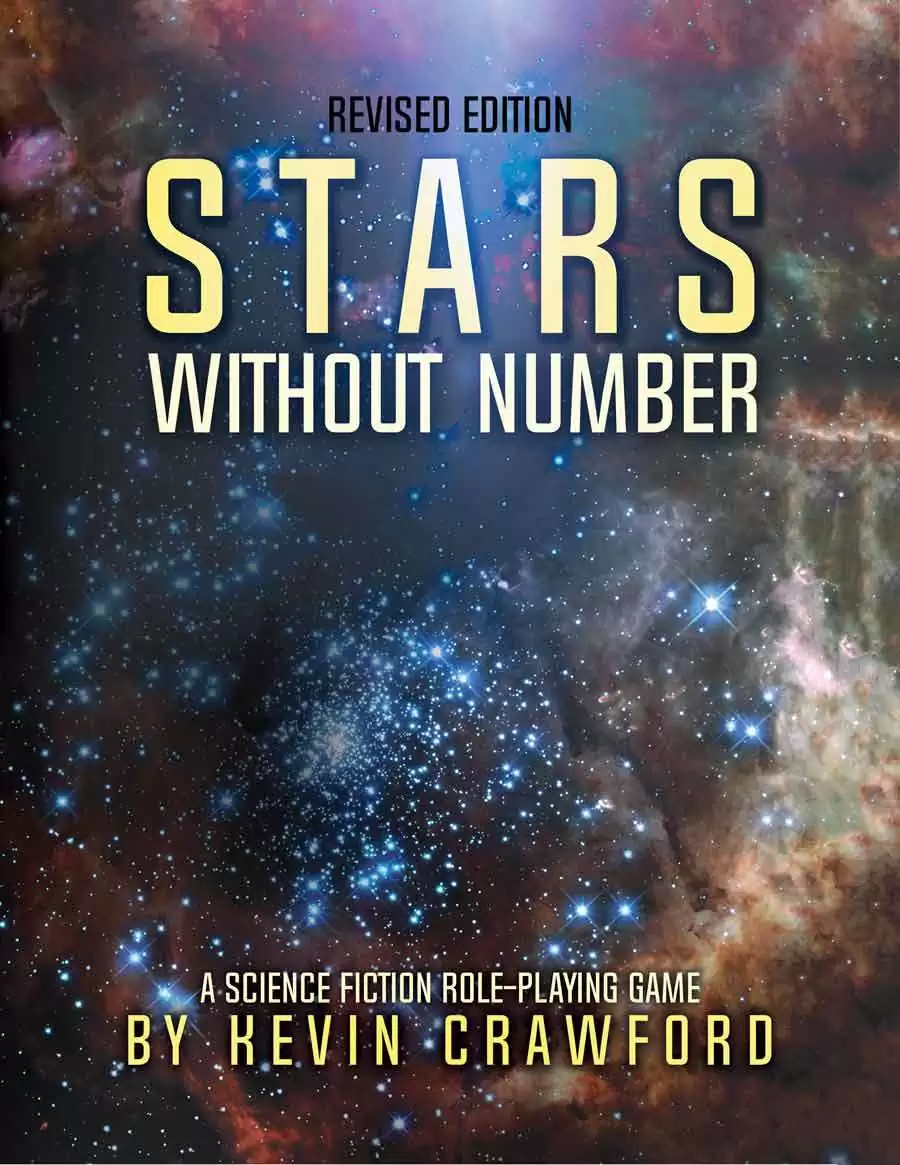
In our recent Stars Without Number session, the game kicked off amid chaos: the players found themselves at a bustling spaceport, where the last shuttles were scrambling to escape a doomed planet. Automated messages blared the inevitable—planet detonation in four hours. This high-stakes scenario immediately threw everyone into the deep end of a thrilling, time-sensitive crisis.
The session wasn’t just about a catastrophic backdrop; it was an exercise in narrative cohesion and character development. I interwove individual cut scenes that gave each player a glimpse into the personal journey that led them to this pivotal moment. These vignettes provided context—revealing past struggles, unique skills, and personal motivations—making their characters not only distinct but also relatable. In those quiet moments, each player could explore their character’s inner life, anchoring them to the story in a way that a grand, impersonal crisis might not have achieved on its own.
By showcasing these individual narratives, the players began to see how their disparate paths converged toward a single, shared destiny. What started as individual survival instincts gradually evolved into a collective drive: banding together to escape the inevitable explosion. The urgency of the dying planet created a crucible that forced them to unite as a cohesive party of adventurers, setting the stage for both cooperative gameplay and rich character interactions.
Several techniques worked harmoniously in this session:
High-Stakes Scenario: Opening with a dramatic, life-or-death situation immediately captured attention and set a clear, urgent goal. With the ticking clock of a planetary detonation, there was no time for hesitation—only action.
Personalised Cut Scenes: By dedicating moments to each player’s backstory, the narrative deepened, allowing individuals to connect their personal histories with the shared crisis. This not only enriched character development but also underscored the theme of unity emerging from chaos.
Dynamic Storytelling: Alternating between the communal crisis and personal flashbacks created a dynamic rhythm in the narrative. This technique not only maintained suspense but also built empathy among players, fostering a sense of camaraderie as they discovered how their lives intertwined.
Collective Threat as a Unifying Force: The external crisis—the impending detonation—served as an equaliser. Regardless of their personal backgrounds, every character had to confront the same formidable enemy: the obliteration of their world. This common enemy naturally drew the players together.
These techniques don’t just work in isolation; they complement each other, creating layers of engagement that are essential in any roleplaying session. When players see that their individual narratives matter and are woven into a larger, epic tapestry, the resulting experience is one of deep investment and collaboration.
For other game masters looking to adopt similar strategies, consider these additional techniques:
Environmental Storytelling: Use your game world to tell stories without words. Background details, ambient sounds, and even the architecture of a spaceport can hint at larger narratives that players can piece together. This enriches the world without heavy exposition.
Parallel Timelines: Similar to cut scenes, you can create narratives that run concurrently. For example, flashbacks or side stories that reveal the history of a location can add depth to the present crisis.
Branching Narratives: Allow player choices to lead to multiple story outcomes. This ensures that each decision feels meaningful and personal, enhancing the overall narrative experience.
Interpersonal Conflict and Cooperation: Introduce scenarios where players must negotiate not only with external forces but also with each other. This adds layers to character interactions, providing both tension and opportunities for growth within the group.
Mystery and Discovery: Embed clues and mysteries within the setting that require collective problem-solving. This encourages players to pool their resources, leading to a more unified group dynamic.
In our session, the blend of imminent danger, personal backstory, and evolving group identity transformed the evacuation from a mere escape into a compelling narrative of survival and unity. Such techniques are invaluable not only in high-octane scenarios but also in any campaign where you wish to nurture a sense of belonging and shared purpose among players. The key lies in balancing individual storytelling with the overarching plot, ensuring that every player feels seen, heard, and an essential part of the adventure.
Ultimately, a successful game master is one who crafts not only the world but also the intricate web of relationships and personal stakes that make the story resonate long after the dice have settled.
Page 1 of 1, totaling 4 entries
Categories
Subscribe


